From Invisible to In-Demand: 90-Day LinkedIn Strategy for Law Firm Partners

Dec 2, 2025

Transform your LinkedIn presence in 90 days with this proven strategy for law firm partners. Build authority, attract clients, and measure real results.

From Invisible to In-Demand: 90-Day LinkedIn Strategy for Law Firm Partners

Dec 2, 2025

Transform your LinkedIn presence in 90 days with this proven strategy for law firm partners. Build authority, attract clients, and measure real results.

Seventy-six percent of legal clients research lawyers on LinkedIn before making contact. Yet many law firm partners struggle with building their personal brand, caught between wanting visibility and lacking the time or clear roadmap to achieve it. The 90-day framework outlined here offers a systematic, time-efficient solution that delivers measurable results without overwhelming your schedule.

This isn't about becoming a social media influencer. It's about strategic visibility that converts to consultations and clients. Research shows that LinkedIn is 277% more effective at generating leads than Facebook and Twitter combined. If you commit to this quarterly approach, you'll transform from invisible to in-demand within three months.

Understanding Why 90 Days Is Your LinkedIn Sweet Spot

Why Three Months Creates Sustainable Momentum

The LinkedIn algorithm rewards consistent presence over sporadic activity. The algorithm operates through a three-step process: quality filtering, engagement testing, and network relevance ranking. Three months provides enough time to test different content formats, learn what resonates with your audience, and optimize your approach without burning out.

The 90-day commitment works because it balances intensity with sustainability. In the first month, you build the foundation. The second month establishes credibility and consistency. By the third month, you're refining based on data and building momentum that continues beyond the initial sprint.

What Success Looks Like After 90 Days

Set realistic expectations from the start. Success metrics include increased weekly profile views, quality connection growth, and meaningful engagement rates. Most importantly, track consultation requests. Based on industry data, consistently active partners generate 2 to 8 consultation requests monthly from LinkedIn activity.

Results vary by practice area and market. Corporate lawyers typically have more success on LinkedIn than family lawyers due to the platform's professional user base. However, even niche practices can thrive by positioning themselves as go-to experts in specialized fields where there's less competition for attention.

Month One: Foundation and Profile Optimization (Days 1-30)

Week 1: The Profile Audit and Overhaul

Start with a comprehensive profile transformation. Your professional headshot should align with your firm's branding and convey approachability. Your headline should reflect your specific area of practice and value proposition rather than just your title. Transform generic headlines like "Partner at XX Law Firm" into benefit-driven statements such as "Helping Tech Businesses Navigate Regulatory Risk."

Your summary must be written in plain English, addressing three key questions: what you do, who you help, and how you solve problems. Avoid excessive legal jargon that alienates business clients. Terms like "pleadings," "interlocutory," and "discovery" mean little to general counsel searching for outside partners. Instead, use client-centric language that demonstrates you understand their challenges.

Update your experience section with achievements, not just job titles. Include certifications, awards, and leadership highlights that demonstrate your expertise and community involvement. Add a custom banner image that reinforces your personal or firm brand. These foundational elements create the credibility signals that influence hiring decisions.

Week 2: Strategic Network Building Begins

Quality trumps quantity in professional networking. Start by connecting with existing and past clients, referral partners, and local business leaders. Personalize every connection request. Real connections come from real conversations, not mass invitations.

Use a simple formula for connection requests: mention where you know them from or why you're reaching out, express genuine interest in their work, and suggest a specific reason to connect. Aim for 20 to 30 new quality connections during this first month. These connections form the foundation of your audience for future content.

Week 3: Content Planning and First Posts

Develop content pillars that showcase your expertise without overwhelming your schedule. Focus on four main categories: legal insights, case studies (when appropriate), industry trends, and client education. Research from 2 million posts shows that posting 2 to 5 times per week increases post impressions by around 1,000 per update.

Plan your first month's content calendar aiming for 2 to 3 posts weekly. Frame posts around client outcomes and business implications rather than technical legal analysis. For example, instead of "New SEC Ruling on Insider Trading," write "What This Week's SEC Decision Means for Your Stock Option Program." This client-focused approach attracts the business leaders who need your services.

Week 4: Engagement Strategy Launch

Comments are ranked number one in importance for the LinkedIn algorithm and directly impact post performance. Implement a simple daily engagement routine that takes just 15 to 20 minutes: comment thoughtfully on 5 relevant posts, send 5 personalized connection requests, and start 5 meaningful conversations in direct messages.

These small daily actions compound significantly over time. They increase your visibility, build reciprocal engagement, and position you as an active member of your professional community. Don't just like posts. Add substantive comments that share insights, ask thoughtful questions, or provide helpful perspectives.

Month One Checklist:

  • Profile completeness: All-Star status achieved

  • 20 to 30 new quality connections added

  • 6 to 8 posts published

  • Daily engagement routine established

  • Baseline metrics recorded (profile views, connection requests)
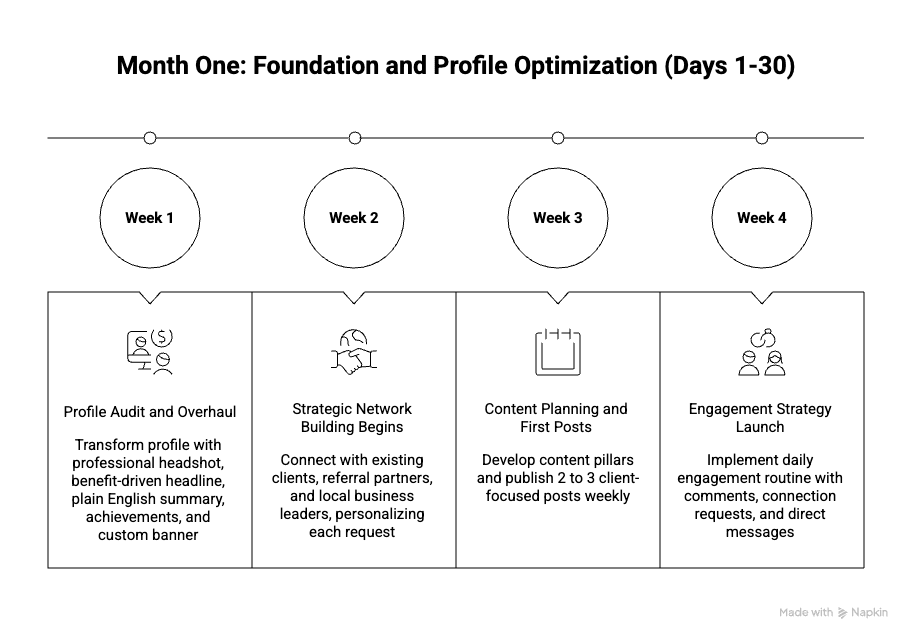
Month 1 Roadmap for LinkedIn Personal Branding Strategy

Month Two: Credibility Building and Consistency (Days 31-60)

How Do I Request Endorsements Without Feeling Awkward?

Social proof powerfully influences hiring decisions. Request endorsements strategically from clients, colleagues, and referral partners who can speak to specific aspects of your work. Use a diplomatic approach: "I'm updating my LinkedIn profile and would appreciate your thoughts on our work together. If you're comfortable providing a brief recommendation about [specific project or outcome], I'd be grateful."

Make it easy for them by offering to draft something for their review. Emphasize reciprocity by offering to provide recommendations in return. Aim for 3 to 5 client or colleague endorsements during this month. These testimonials become powerful trust signals for prospects researching you.

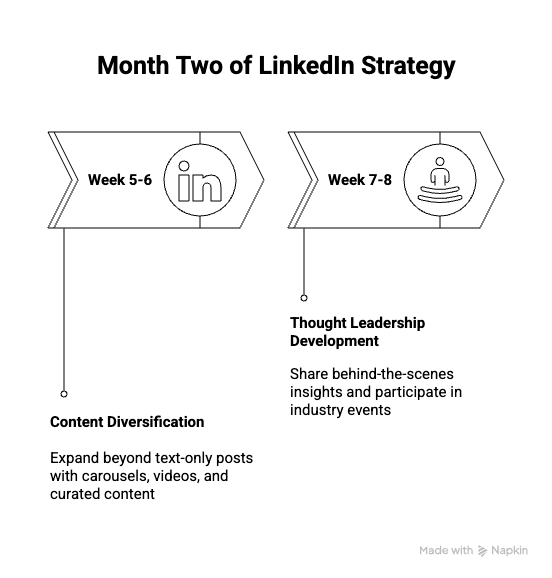
Week 5-6: Content Diversification

Expand beyond text-only posts. Different content formats perform differently, with carousels generating 278% more engagement than videos and 600% more than text posts. Share short insights on major legal developments, industry event briefings, and curated content from trusted sources with your brief commentary.

The sweet spot for posting frequency is 2 to 5 times per week, with consistency being more important than volume. Test different formats to identify what resonates with your specific audience. Document carousels explaining complex legal concepts in simple terms often perform exceptionally well for lawyers.

Week 7-8: Thought Leadership Development

Share behind-the-scenes insights into how you approach complex legal problems. Post about speaking engagements, webinars, or panels you're participating in. Link to publications or thought leadership pieces where appropriate. Focus on demonstrating expertise while avoiding excessive technical jargon.

Posts that receive strong engagement within the first hour are shown to second and third-degree connections more frequently. This "golden hour" determines much of your post's ultimate reach. Consider timing your posts when you can be available to respond quickly to initial comments.

What If I Don't Have Time to Create Original Content?

Time constraints shouldn't prevent LinkedIn success. Implement time-saving strategies like repurposing firm newsletters, commenting on trending legal news with your quick take, sharing insights from continuing legal education sessions, or using voice-to-text while commuting to draft posts.

Quality matters more than perfection. A thoughtful two-paragraph post shared consistently outperforms an occasional long-form article. Batch your content creation by dedicating one or two hours weekly to drafting multiple posts, then scheduling them throughout the week using LinkedIn's native scheduling feature.

Month Two Checklist:

  • 3 to 5 client or colleague endorsements received

  • 30 to 40 new strategic connections

  • 8 to 10 posts published with varied formats

  • Joined 2 to 3 relevant LinkedIn groups

  • First consultation inquiry tracked

Month 2 Roadmap for LinkedIn Personal Branding Strategy

Month Three: Optimization and Scaling (Days 61-90)

Week 9-10: Analytics Review and Strategy Refinement

Dive into LinkedIn analytics to understand what's working. The first hour after posting is crucial for LinkedIn's algorithm, with posts receiving immediate engagement more likely to reach wider audiences. Identify which post types generate most engagement, what times and days perform best, and which connections engage most frequently.

Adjust your posting schedule and content mix based on data. If case study posts consistently outperform theoretical discussions, create more case studies. If Tuesday morning posts get double the engagement of Friday afternoon posts, shift your schedule accordingly. Let data guide your optimization.

Can You Build Authority Without Talking About Yourself Constantly?

Many lawyers feel uncomfortable with self-promotion. Reframe personal branding as client service: you're educating your network, solving problems publicly, and demonstrating how you think. The balance lies between value-adding content (80%) and occasional achievements or wins (20%).

Share client success stories (with permission) that highlight problem-solving approaches rather than focusing on yourself. Discuss industry challenges and offer perspective. Comment on regulatory changes and their business implications. This service-oriented approach builds authority without feeling promotional.

Week 11-12: Response Protocols and Conversion Optimization

Response speed matters significantly. Aim to respond to LinkedIn messages within one business day. Develop templates for common inquiries while personalizing each response. Create clear pathways for interested prospects by adding consultation links to your Featured section and including a call-to-action in your About section.

Track which content drives direct messages and consultation requests. If posts about specific practice areas consistently generate inquiries, create more content in those areas. Posts that generate comment discussions rather than simple reactions perform significantly better, with indirect comments (replies to other comments) increasing reach by up to 240%.

Building Sustainable Habits Beyond Day 90

Transition from the intensive 90-day sprint to a maintainable routine. Implement quarterly profile updates, monthly strategic reviews, and continued 2 to 3 posts weekly. Set up systems for sustainability: batch content creation monthly, delegate routine engagement to an assistant, and calendar-block specific LinkedIn time.

The recommended frequency for maintaining momentum is posting 3 to 4 times per week, never twice within 24 hours. Vary formats, maintain consistent quality, and continue genuine engagement with your network. The habits you've built over 90 days should now feel natural rather than burdensome.

Month Three Checklist:

  • Quarter-over-quarter profile view increase of 40% or more

  • 60-plus total new connections (cumulative)

  • 8 to 10 posts published

  • 2 to 8 consultation requests tracked

  • Sustainable posting schedule established
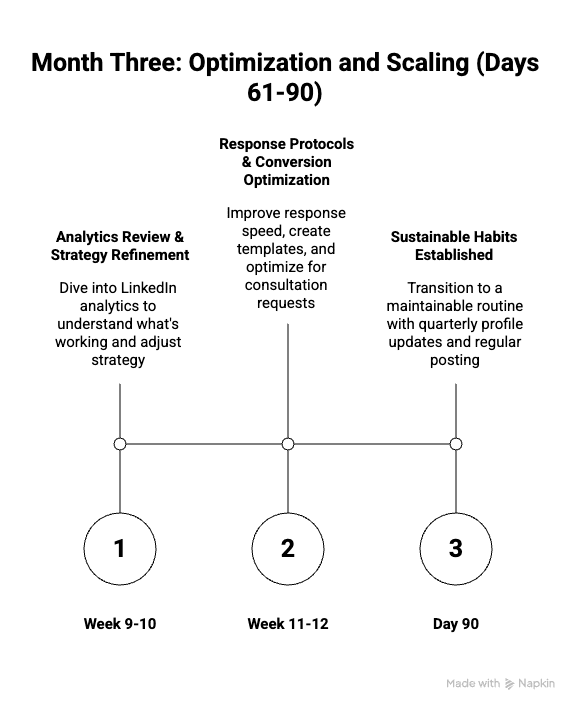
Month 3 Roadmap for LinkedIn Personal Branding Strategy

Common Mistakes That Derail Your 90-Day Strategy

The "Set It and Forget It" Profile

Completing profile optimization then abandoning active engagement is a critical mistake. Your profile provides the foundation, but ongoing content and networking drive results. A perfect profile with no activity generates minimal benefit. Consistent presence matters more than profile perfection.

Posting Without Purpose

Avoid sharing firm press releases exclusively or posting sporadically without strategic intent. Every post should add value to your network or demonstrate expertise. Ask yourself before posting: Does this educate, inform, or help my audience? If not, reconsider sharing it.

Connecting Without Engaging

Posting alone isn't enough; you need to actively engage with others to increase visibility and build relationships. Many partners collect hundreds of connections but never interact with their content. This passive approach wastes networking potential. Engagement drives visibility through the algorithm's network effects.

Excessive Legal Jargon

Business clients seek lawyers who understand their challenges, not those who speak in impenetrable legalese. Write for your audience, not for other lawyers. Translate complex legal concepts into business implications. A general counsel cares more about "How this affects your M&A timeline" than "The implications for pre-merger notification requirements under Hart-Scott-Rodino."

Measuring Success: Metrics That Actually Matter for Law Partners

Vanity Metrics vs. Business Development Metrics

Distinguish between follower counts (vanity metrics) and consultation requests (business development metrics). Focus on meaningful indicators: weekly profile views trending upward, engagement rates on posts showing quality interactions, inbound message quality reflecting genuine interest, and most critically, booked consultations that lead to client relationships.

Profile views indicate visibility. Engagement rates demonstrate content resonance. But consultation requests measure actual business impact. Track all three but prioritize conversion metrics that directly affect your practice development.

How Many Client Consultations Should I Expect from LinkedIn?

Set realistic expectations based on consistent data. Active partners who post regularly, engage authentically, and optimize their profiles generate 2 to 8 consultation requests monthly from LinkedIn activity. Practice area significantly influences results. Technology-focused practices, corporate law, and intellectual property typically see higher consultation rates than consumer-facing practices.

Remember that LinkedIn works best for building relationships with decision-makers and other professionals who can refer business. The platform excels at connecting you with in-house counsel, business owners, and referral sources rather than individual consumers seeking legal services.

Creating Your Personal LinkedIn Dashboard

Implement simple tracking through a spreadsheet or note system. Record weekly profile views, monthly connection growth, posts published, average engagement rate per post, consultation requests received, and conversions to actual clients. Review metrics monthly and adjust strategy quarterly based on trends.

Look for patterns: Which post topics drive most engagement? What days and times generate best responses? Which connections consistently engage with your content? Use these insights to refine your approach continuously. A good engagement rate on LinkedIn is typically around 2%, though high-performing content can reach 5 to 6%.

Tools and Resources to Support Your 90-Day Journey

Content Creation and Scheduling

LinkedIn's native scheduling feature allows you to plan posts in advance without daily manual effort. This consistency proves crucial for algorithm performance. Alternative tools like Hootsuite or Buffer offer additional analytics and multi-platform management if needed.

Consider working with your firm's marketing team to develop content calendars, design visual assets for posts, and maintain brand consistency across partner profiles. Professional design services can ensure your visual content stands out while maintaining quality and brand alignment.

Engagement Tracking

LinkedIn's native analytics dashboard provides essential metrics: post impressions, engagement rates, profile views, and search appearances. Enable Creator Mode to access additional analytics features. Monitor which content types perform best and adjust your strategy accordingly.

Pay attention to demographics data showing who's viewing your profile and engaging with content. This information helps refine your targeting and ensures you're reaching your intended audience of potential clients and referral sources.

Getting Firm Support

Involve your marketing team in LinkedIn strategy discussions. Request administrative support for routine tasks like connection request follow-up or comment monitoring. Consider collaborating with other partners on content sharing and mutual engagement to amplify reach across your firm.

If your firm is considering broader brand initiatives, a comprehensive rebranding approach should include personal branding guidelines for partners. Your individual presence should complement firm-wide branding efforts rather than conflict with them.

Understanding Platform Strategy and Priorities

Why LinkedIn Over Other Platforms?

LinkedIn dominates as the platform where legal clients make hiring decisions. Ninety-six percent of US executives use LinkedIn to vet service providers and legal advisors. Eighty-seven percent of law firms and nearly all partners maintain LinkedIn profiles. This concentration makes LinkedIn the essential platform for law firm business development.

While newer platforms may seem appealing, law firms should be strategic about platform investments. LinkedIn's professional context and decision-maker concentration provide unmatched value for partner-level business development compared to consumer-focused platforms.

The Role of Client Experience in Digital Presence

Your LinkedIn profile represents a critical touchpoint in your overall client experience strategy. Potential clients form impressions about your approachability, expertise, and values based on your digital presence before ever speaking with you. Understanding how brand experience, client experience, and user experience interconnect helps create consistent, positive impressions across all client interactions.

Consider your LinkedIn presence as the first chapter in your client relationship story. Every element, from your headline to your engagement style, contributes to the narrative prospects build about whether you're the right fit for their needs.

Conclusion: Your Reputation Is Digital

Ninety days provides sufficient time to see meaningful results while maintaining focus and preventing burnout. The data is clear: 76% of legal clients research lawyers on LinkedIn before making contact, making this effort directly tied to business development success. Building a personal brand may feel uncomfortable for lawyers trained to let their work speak for itself, but it has become essential for partner-level success in today's market.

If you commit to the daily 15 to 20 minutes of engagement and follow this quarterly roadmap, you will transform from invisible to in-demand within three months. The systematic approach removes guesswork, the metrics provide accountability, and the time-efficient structure respects your existing commitments.

Your professional reputation no longer develops solely through courtroom victories or closed deals. It builds daily through the digital impressions you create, the insights you share, and the relationships you nurture online. Make time for systematic brand building because the return proves measurable and your competitors are already doing it.

Ready to Transform Your LinkedIn Presence?

DesignBff specializes in helping law firms build authentic personal brands that attract ideal clients. Book your free marketing audit to discuss a personalized LinkedIn and marketing strategy for your firm, or explore our proven rebranding approach that has helped partners like you go from invisible to in-demand.

Frequently Asked Questions

Q1: How much time does a 90-day LinkedIn strategy actually require?

Plan for 15 to 20 minutes daily for engagement activities (commenting on posts, responding to messages, and networking) plus 1 to 2 hours weekly for content creation. This totals approximately 2 to 3 hours per week, which is minimal compared to traditional business development activities like networking events or conference attendance. The time investment decreases as you develop efficient systems and routines.

Q2: What if I'm in a niche practice area with limited LinkedIn presence?

Niche practices actually benefit more from LinkedIn because there's less competition for attention. Focus on educating your specific target audience and positioning yourself as the go-to expert in that specialty. Smaller audiences can generate higher quality engagement and more relevant consultation requests than broad, generic practices attempting to appeal to everyone.

Q3: Can I use AI tools to help create LinkedIn content?

AI can assist with idea generation and initial drafting, but authenticity remains critical for lawyers. Use AI as a starting point but ensure every post reflects your genuine voice, expertise, and perspective. LinkedIn's sophisticated detection systems identify AI-generated content with remarkable accuracy, resulting in 30% less reach and 55% less engagement for obvious AI content. Clients can spot generic AI content immediately, which damages rather than builds credibility.

Q4: Should I focus on my personal profile or my law firm's company page?

Posts from personal accounts exhibit much higher levels of engagement than those from company pages. Prioritize your personal profile for the 90-day strategy while occasionally sharing key firm updates. Personal connections trust individual professionals more than faceless corporate entities. Your authentic voice and expertise carry more weight than firm announcements.

Q5: What types of posts get the most engagement for lawyers?

Posts that translate complex legal issues into business implications consistently perform best. Think "What This New Regulation Means for Your Business" rather than technical legal analysis. Share practical insights, client-focused case studies, and commentary on industry trends that affect your target clients. Avoid excessive jargon and lead with the business impact before diving into legal details.

Q6: How do I balance LinkedIn activity with ethical obligations?

Never discuss specific client matters without explicit permission. Avoid giving detailed legal advice publicly. Clearly label all content as general information, not legal advice for specific situations. Follow your jurisdiction's advertising and solicitation rules carefully. When uncertain, consult your state bar guidelines or firm's ethics committee before posting. Sharing general industry insights and thought leadership typically raises no ethical concerns.

Seventy-six percent of legal clients research lawyers on LinkedIn before making contact. Yet many law firm partners struggle with building their personal brand, caught between wanting visibility and lacking the time or clear roadmap to achieve it. The 90-day framework outlined here offers a systematic, time-efficient solution that delivers measurable results without overwhelming your schedule.

This isn't about becoming a social media influencer. It's about strategic visibility that converts to consultations and clients. Research shows that LinkedIn is 277% more effective at generating leads than Facebook and Twitter combined. If you commit to this quarterly approach, you'll transform from invisible to in-demand within three months.

Understanding Why 90 Days Is Your LinkedIn Sweet Spot

Why Three Months Creates Sustainable Momentum

The LinkedIn algorithm rewards consistent presence over sporadic activity. The algorithm operates through a three-step process: quality filtering, engagement testing, and network relevance ranking. Three months provides enough time to test different content formats, learn what resonates with your audience, and optimize your approach without burning out.

The 90-day commitment works because it balances intensity with sustainability. In the first month, you build the foundation. The second month establishes credibility and consistency. By the third month, you're refining based on data and building momentum that continues beyond the initial sprint.

What Success Looks Like After 90 Days

Set realistic expectations from the start. Success metrics include increased weekly profile views, quality connection growth, and meaningful engagement rates. Most importantly, track consultation requests. Based on industry data, consistently active partners generate 2 to 8 consultation requests monthly from LinkedIn activity.

Results vary by practice area and market. Corporate lawyers typically have more success on LinkedIn than family lawyers due to the platform's professional user base. However, even niche practices can thrive by positioning themselves as go-to experts in specialized fields where there's less competition for attention.

Month One: Foundation and Profile Optimization (Days 1-30)

Week 1: The Profile Audit and Overhaul

Start with a comprehensive profile transformation. Your professional headshot should align with your firm's branding and convey approachability. Your headline should reflect your specific area of practice and value proposition rather than just your title. Transform generic headlines like "Partner at XX Law Firm" into benefit-driven statements such as "Helping Tech Businesses Navigate Regulatory Risk."

Your summary must be written in plain English, addressing three key questions: what you do, who you help, and how you solve problems. Avoid excessive legal jargon that alienates business clients. Terms like "pleadings," "interlocutory," and "discovery" mean little to general counsel searching for outside partners. Instead, use client-centric language that demonstrates you understand their challenges.

Update your experience section with achievements, not just job titles. Include certifications, awards, and leadership highlights that demonstrate your expertise and community involvement. Add a custom banner image that reinforces your personal or firm brand. These foundational elements create the credibility signals that influence hiring decisions.

Week 2: Strategic Network Building Begins

Quality trumps quantity in professional networking. Start by connecting with existing and past clients, referral partners, and local business leaders. Personalize every connection request. Real connections come from real conversations, not mass invitations.

Use a simple formula for connection requests: mention where you know them from or why you're reaching out, express genuine interest in their work, and suggest a specific reason to connect. Aim for 20 to 30 new quality connections during this first month. These connections form the foundation of your audience for future content.

Week 3: Content Planning and First Posts

Develop content pillars that showcase your expertise without overwhelming your schedule. Focus on four main categories: legal insights, case studies (when appropriate), industry trends, and client education. Research from 2 million posts shows that posting 2 to 5 times per week increases post impressions by around 1,000 per update.

Plan your first month's content calendar aiming for 2 to 3 posts weekly. Frame posts around client outcomes and business implications rather than technical legal analysis. For example, instead of "New SEC Ruling on Insider Trading," write "What This Week's SEC Decision Means for Your Stock Option Program." This client-focused approach attracts the business leaders who need your services.

Week 4: Engagement Strategy Launch

Comments are ranked number one in importance for the LinkedIn algorithm and directly impact post performance. Implement a simple daily engagement routine that takes just 15 to 20 minutes: comment thoughtfully on 5 relevant posts, send 5 personalized connection requests, and start 5 meaningful conversations in direct messages.

These small daily actions compound significantly over time. They increase your visibility, build reciprocal engagement, and position you as an active member of your professional community. Don't just like posts. Add substantive comments that share insights, ask thoughtful questions, or provide helpful perspectives.

Month One Checklist:

  • Profile completeness: All-Star status achieved

  • 20 to 30 new quality connections added

  • 6 to 8 posts published

  • Daily engagement routine established

  • Baseline metrics recorded (profile views, connection requests)

Month 1 Roadmap for LinkedIn Personal Branding Strategy

Month Two: Credibility Building and Consistency (Days 31-60)

How Do I Request Endorsements Without Feeling Awkward?

Social proof powerfully influences hiring decisions. Request endorsements strategically from clients, colleagues, and referral partners who can speak to specific aspects of your work. Use a diplomatic approach: "I'm updating my LinkedIn profile and would appreciate your thoughts on our work together. If you're comfortable providing a brief recommendation about [specific project or outcome], I'd be grateful."

Make it easy for them by offering to draft something for their review. Emphasize reciprocity by offering to provide recommendations in return. Aim for 3 to 5 client or colleague endorsements during this month. These testimonials become powerful trust signals for prospects researching you.

Week 5-6: Content Diversification

Expand beyond text-only posts. Different content formats perform differently, with carousels generating 278% more engagement than videos and 600% more than text posts. Share short insights on major legal developments, industry event briefings, and curated content from trusted sources with your brief commentary.

The sweet spot for posting frequency is 2 to 5 times per week, with consistency being more important than volume. Test different formats to identify what resonates with your specific audience. Document carousels explaining complex legal concepts in simple terms often perform exceptionally well for lawyers.

Week 7-8: Thought Leadership Development

Share behind-the-scenes insights into how you approach complex legal problems. Post about speaking engagements, webinars, or panels you're participating in. Link to publications or thought leadership pieces where appropriate. Focus on demonstrating expertise while avoiding excessive technical jargon.

Posts that receive strong engagement within the first hour are shown to second and third-degree connections more frequently. This "golden hour" determines much of your post's ultimate reach. Consider timing your posts when you can be available to respond quickly to initial comments.

What If I Don't Have Time to Create Original Content?

Time constraints shouldn't prevent LinkedIn success. Implement time-saving strategies like repurposing firm newsletters, commenting on trending legal news with your quick take, sharing insights from continuing legal education sessions, or using voice-to-text while commuting to draft posts.

Quality matters more than perfection. A thoughtful two-paragraph post shared consistently outperforms an occasional long-form article. Batch your content creation by dedicating one or two hours weekly to drafting multiple posts, then scheduling them throughout the week using LinkedIn's native scheduling feature.

Month Two Checklist:

  • 3 to 5 client or colleague endorsements received

  • 30 to 40 new strategic connections

  • 8 to 10 posts published with varied formats

  • Joined 2 to 3 relevant LinkedIn groups

  • First consultation inquiry tracked

Month 2 Roadmap for LinkedIn Personal Branding Strategy

Month Three: Optimization and Scaling (Days 61-90)

Week 9-10: Analytics Review and Strategy Refinement

Dive into LinkedIn analytics to understand what's working. The first hour after posting is crucial for LinkedIn's algorithm, with posts receiving immediate engagement more likely to reach wider audiences. Identify which post types generate most engagement, what times and days perform best, and which connections engage most frequently.

Adjust your posting schedule and content mix based on data. If case study posts consistently outperform theoretical discussions, create more case studies. If Tuesday morning posts get double the engagement of Friday afternoon posts, shift your schedule accordingly. Let data guide your optimization.

Can You Build Authority Without Talking About Yourself Constantly?

Many lawyers feel uncomfortable with self-promotion. Reframe personal branding as client service: you're educating your network, solving problems publicly, and demonstrating how you think. The balance lies between value-adding content (80%) and occasional achievements or wins (20%).

Share client success stories (with permission) that highlight problem-solving approaches rather than focusing on yourself. Discuss industry challenges and offer perspective. Comment on regulatory changes and their business implications. This service-oriented approach builds authority without feeling promotional.

Week 11-12: Response Protocols and Conversion Optimization

Response speed matters significantly. Aim to respond to LinkedIn messages within one business day. Develop templates for common inquiries while personalizing each response. Create clear pathways for interested prospects by adding consultation links to your Featured section and including a call-to-action in your About section.

Track which content drives direct messages and consultation requests. If posts about specific practice areas consistently generate inquiries, create more content in those areas. Posts that generate comment discussions rather than simple reactions perform significantly better, with indirect comments (replies to other comments) increasing reach by up to 240%.

Building Sustainable Habits Beyond Day 90

Transition from the intensive 90-day sprint to a maintainable routine. Implement quarterly profile updates, monthly strategic reviews, and continued 2 to 3 posts weekly. Set up systems for sustainability: batch content creation monthly, delegate routine engagement to an assistant, and calendar-block specific LinkedIn time.

The recommended frequency for maintaining momentum is posting 3 to 4 times per week, never twice within 24 hours. Vary formats, maintain consistent quality, and continue genuine engagement with your network. The habits you've built over 90 days should now feel natural rather than burdensome.

Month Three Checklist:

  • Quarter-over-quarter profile view increase of 40% or more

  • 60-plus total new connections (cumulative)

  • 8 to 10 posts published

  • 2 to 8 consultation requests tracked

  • Sustainable posting schedule established

Month 3 Roadmap for LinkedIn Personal Branding Strategy

Common Mistakes That Derail Your 90-Day Strategy

The "Set It and Forget It" Profile

Completing profile optimization then abandoning active engagement is a critical mistake. Your profile provides the foundation, but ongoing content and networking drive results. A perfect profile with no activity generates minimal benefit. Consistent presence matters more than profile perfection.

Posting Without Purpose

Avoid sharing firm press releases exclusively or posting sporadically without strategic intent. Every post should add value to your network or demonstrate expertise. Ask yourself before posting: Does this educate, inform, or help my audience? If not, reconsider sharing it.

Connecting Without Engaging

Posting alone isn't enough; you need to actively engage with others to increase visibility and build relationships. Many partners collect hundreds of connections but never interact with their content. This passive approach wastes networking potential. Engagement drives visibility through the algorithm's network effects.

Excessive Legal Jargon

Business clients seek lawyers who understand their challenges, not those who speak in impenetrable legalese. Write for your audience, not for other lawyers. Translate complex legal concepts into business implications. A general counsel cares more about "How this affects your M&A timeline" than "The implications for pre-merger notification requirements under Hart-Scott-Rodino."

Measuring Success: Metrics That Actually Matter for Law Partners

Vanity Metrics vs. Business Development Metrics

Distinguish between follower counts (vanity metrics) and consultation requests (business development metrics). Focus on meaningful indicators: weekly profile views trending upward, engagement rates on posts showing quality interactions, inbound message quality reflecting genuine interest, and most critically, booked consultations that lead to client relationships.

Profile views indicate visibility. Engagement rates demonstrate content resonance. But consultation requests measure actual business impact. Track all three but prioritize conversion metrics that directly affect your practice development.

How Many Client Consultations Should I Expect from LinkedIn?

Set realistic expectations based on consistent data. Active partners who post regularly, engage authentically, and optimize their profiles generate 2 to 8 consultation requests monthly from LinkedIn activity. Practice area significantly influences results. Technology-focused practices, corporate law, and intellectual property typically see higher consultation rates than consumer-facing practices.

Remember that LinkedIn works best for building relationships with decision-makers and other professionals who can refer business. The platform excels at connecting you with in-house counsel, business owners, and referral sources rather than individual consumers seeking legal services.

Creating Your Personal LinkedIn Dashboard

Implement simple tracking through a spreadsheet or note system. Record weekly profile views, monthly connection growth, posts published, average engagement rate per post, consultation requests received, and conversions to actual clients. Review metrics monthly and adjust strategy quarterly based on trends.

Look for patterns: Which post topics drive most engagement? What days and times generate best responses? Which connections consistently engage with your content? Use these insights to refine your approach continuously. A good engagement rate on LinkedIn is typically around 2%, though high-performing content can reach 5 to 6%.

Tools and Resources to Support Your 90-Day Journey

Content Creation and Scheduling

LinkedIn's native scheduling feature allows you to plan posts in advance without daily manual effort. This consistency proves crucial for algorithm performance. Alternative tools like Hootsuite or Buffer offer additional analytics and multi-platform management if needed.

Consider working with your firm's marketing team to develop content calendars, design visual assets for posts, and maintain brand consistency across partner profiles. Professional design services can ensure your visual content stands out while maintaining quality and brand alignment.

Engagement Tracking

LinkedIn's native analytics dashboard provides essential metrics: post impressions, engagement rates, profile views, and search appearances. Enable Creator Mode to access additional analytics features. Monitor which content types perform best and adjust your strategy accordingly.

Pay attention to demographics data showing who's viewing your profile and engaging with content. This information helps refine your targeting and ensures you're reaching your intended audience of potential clients and referral sources.

Getting Firm Support

Involve your marketing team in LinkedIn strategy discussions. Request administrative support for routine tasks like connection request follow-up or comment monitoring. Consider collaborating with other partners on content sharing and mutual engagement to amplify reach across your firm.

If your firm is considering broader brand initiatives, a comprehensive rebranding approach should include personal branding guidelines for partners. Your individual presence should complement firm-wide branding efforts rather than conflict with them.

Understanding Platform Strategy and Priorities

Why LinkedIn Over Other Platforms?

LinkedIn dominates as the platform where legal clients make hiring decisions. Ninety-six percent of US executives use LinkedIn to vet service providers and legal advisors. Eighty-seven percent of law firms and nearly all partners maintain LinkedIn profiles. This concentration makes LinkedIn the essential platform for law firm business development.

While newer platforms may seem appealing, law firms should be strategic about platform investments. LinkedIn's professional context and decision-maker concentration provide unmatched value for partner-level business development compared to consumer-focused platforms.

The Role of Client Experience in Digital Presence

Your LinkedIn profile represents a critical touchpoint in your overall client experience strategy. Potential clients form impressions about your approachability, expertise, and values based on your digital presence before ever speaking with you. Understanding how brand experience, client experience, and user experience interconnect helps create consistent, positive impressions across all client interactions.

Consider your LinkedIn presence as the first chapter in your client relationship story. Every element, from your headline to your engagement style, contributes to the narrative prospects build about whether you're the right fit for their needs.

Conclusion: Your Reputation Is Digital

Ninety days provides sufficient time to see meaningful results while maintaining focus and preventing burnout. The data is clear: 76% of legal clients research lawyers on LinkedIn before making contact, making this effort directly tied to business development success. Building a personal brand may feel uncomfortable for lawyers trained to let their work speak for itself, but it has become essential for partner-level success in today's market.

If you commit to the daily 15 to 20 minutes of engagement and follow this quarterly roadmap, you will transform from invisible to in-demand within three months. The systematic approach removes guesswork, the metrics provide accountability, and the time-efficient structure respects your existing commitments.

Your professional reputation no longer develops solely through courtroom victories or closed deals. It builds daily through the digital impressions you create, the insights you share, and the relationships you nurture online. Make time for systematic brand building because the return proves measurable and your competitors are already doing it.

Ready to Transform Your LinkedIn Presence?

DesignBff specializes in helping law firms build authentic personal brands that attract ideal clients. Book your free marketing audit to discuss a personalized LinkedIn and marketing strategy for your firm, or explore our proven rebranding approach that has helped partners like you go from invisible to in-demand.

Frequently Asked Questions

Q1: How much time does a 90-day LinkedIn strategy actually require?

Plan for 15 to 20 minutes daily for engagement activities (commenting on posts, responding to messages, and networking) plus 1 to 2 hours weekly for content creation. This totals approximately 2 to 3 hours per week, which is minimal compared to traditional business development activities like networking events or conference attendance. The time investment decreases as you develop efficient systems and routines.

Q2: What if I'm in a niche practice area with limited LinkedIn presence?

Niche practices actually benefit more from LinkedIn because there's less competition for attention. Focus on educating your specific target audience and positioning yourself as the go-to expert in that specialty. Smaller audiences can generate higher quality engagement and more relevant consultation requests than broad, generic practices attempting to appeal to everyone.

Q3: Can I use AI tools to help create LinkedIn content?

AI can assist with idea generation and initial drafting, but authenticity remains critical for lawyers. Use AI as a starting point but ensure every post reflects your genuine voice, expertise, and perspective. LinkedIn's sophisticated detection systems identify AI-generated content with remarkable accuracy, resulting in 30% less reach and 55% less engagement for obvious AI content. Clients can spot generic AI content immediately, which damages rather than builds credibility.

Q4: Should I focus on my personal profile or my law firm's company page?

Posts from personal accounts exhibit much higher levels of engagement than those from company pages. Prioritize your personal profile for the 90-day strategy while occasionally sharing key firm updates. Personal connections trust individual professionals more than faceless corporate entities. Your authentic voice and expertise carry more weight than firm announcements.

Q5: What types of posts get the most engagement for lawyers?

Posts that translate complex legal issues into business implications consistently perform best. Think "What This New Regulation Means for Your Business" rather than technical legal analysis. Share practical insights, client-focused case studies, and commentary on industry trends that affect your target clients. Avoid excessive jargon and lead with the business impact before diving into legal details.

Q6: How do I balance LinkedIn activity with ethical obligations?

Never discuss specific client matters without explicit permission. Avoid giving detailed legal advice publicly. Clearly label all content as general information, not legal advice for specific situations. Follow your jurisdiction's advertising and solicitation rules carefully. When uncertain, consult your state bar guidelines or firm's ethics committee before posting. Sharing general industry insights and thought leadership typically raises no ethical concerns.

Great design isn't just about making things pretty, it's about solving the right problems. We bring strategic thinking and AI-powered creativity together to help your business stand out and grow.

Ready to explore what's possible?

Extreme close-up black and white photograph of a human eye

Great design isn't just about making things pretty, it's about solving the right problems. We bring strategic thinking and AI-powered creativity together to help your business stand out and grow.

Ready to explore what's possible?

Extreme close-up black and white photograph of a human eye

Great design isn't just about making things pretty, it's about solving the right problems. We bring strategic thinking and AI-powered creativity together to help your business stand out and grow.

Ready to explore what's possible?

Extreme close-up black and white photograph of a human eye

Day Job